
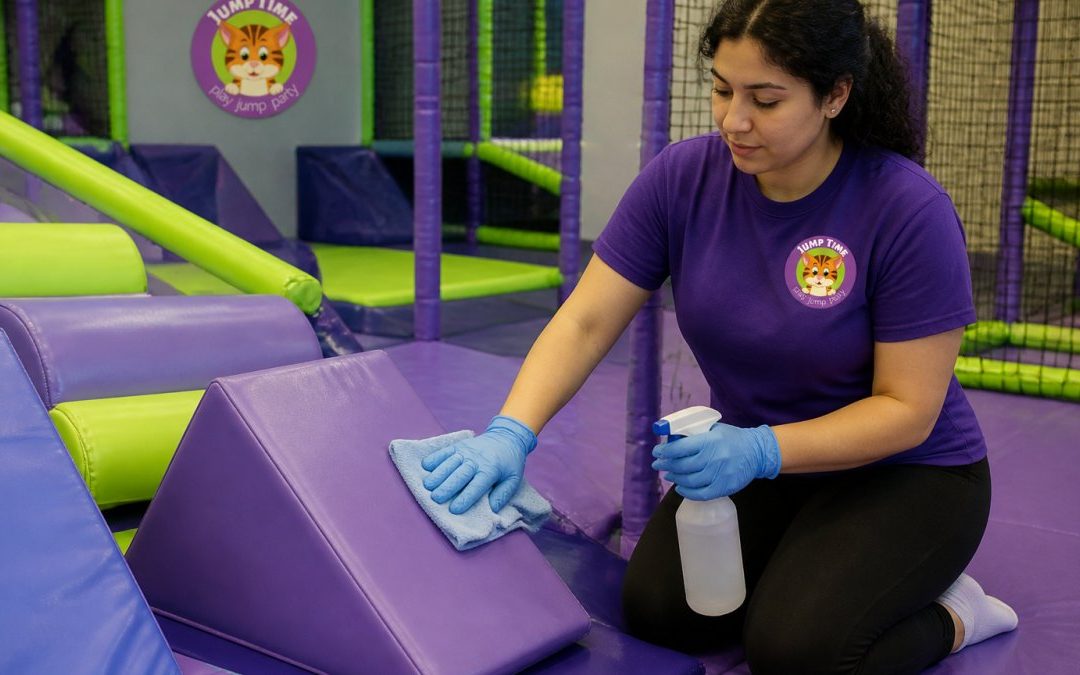
Last Updated: October 30, 2026
Quick Summary
To sanitize indoor play equipment, clean visible dirt first with soap and water, then apply an EPA-registered sanitizer and let it sit for the full contact time on the label. Always follow manufacturer instructions, and dry every surface completely before children return.
- Clean first, then sanitize or disinfect, because a film of dirt blocks the sanitizer from working.
- Never mix bleach with ammonia or vinegar, since the combination releases dangerous fumes.
- Wash ball pit balls in mesh bags, rinse until no suds remain, and dry every ball before refill.
- Wipe foam padding with a damp cloth rather than soaking it, so moisture doesn’t get trapped inside.
- Reopen only when surfaces are dry, residue-free, and inspected, and the space has been ventilated.
Table of Contents
- Why Indoor Play Equipment Needs Regular Cleaning and Sanitizing
- Choosing Child-Safe Cleaners and Disinfectants
- Step-by-Step: How to Sanitize Indoor Play Equipment by Material
- How to Sanitize a Ball Pit: Balls, Walls, and Floor
- Your Indoor Playground Cleaning Checklist
- How Often Should Indoor Play Centers Be Cleaned?
- Drying, Inspecting, and Reopening After Sanitizing
- Booking a Clean, Safe Play Session at Jump Time
- Frequently Asked Questions
Why Indoor Play Equipment Needs Regular Cleaning and Sanitizing
Every jump, slide, and crawl puts a child’s hands, mouth, and clothes against the same surfaces dozens of other children touched that day. Indoor play equipment needs routine cleaning and sanitizing because shared surfaces collect germs fast, and young children spread them faster.
Surface hygiene is part of running a safe play space. Here is what matters.
- High-touch surfaces collect the most germs: rails, slide edges, handles, and play panels.
- Soft play traps crumbs, sweat, and saliva in seams and padding.
- Ball pits hold hundreds of shared play balls that need regular washing.
- Visible dirt shows up fast on light-colored vinyl and foam.
Cleaning vs. Sanitizing vs. Disinfecting: What’s the Difference?
Cleaning removes visible dirt and grime with soap and water. Sanitizing lowers the number of germs on a surface to a safer level (the EPA). Disinfecting kills most germs on a surface after it has been cleaned.
The order matters. You clean first, then sanitize or disinfect. Skipping the cleaning step leaves a film that blocks the sanitizer from doing its job.
Choosing Child-Safe Cleaners and Disinfectants
Pick products labeled for use on children’s play equipment, then follow the label exactly. A cleaner that works well on a bathroom counter may damage vinyl padding or leave a residue children touch all day.
Look for these traits:
- EPA-registered disinfectants labeled for the surface type
- Fragrance-free or low-odor formulas for enclosed spaces
- No harsh bleach on soft play or foam
- A clear contact time printed on the label
Watch out: mixing cleaners, especially anything with bleach and anything with ammonia, can release dangerous fumes (the EPA). Never combine products.
Reading Product Labels and Manufacturer Instructions
The label is the rulebook. It tells you the dilution, the contact time, and which surfaces the product suits. Contact time is how long the surface stays wet for the product to work, and cutting it short weakens the result (the EPA).
Equipment makers publish their own care instructions too. Follow theirs first when the two disagree. A diluted bleach solution works for some hard surfaces, but it can fade colors and break down foam over time.
Step-by-Step: How to Sanitize Indoor Play Equipment by Material
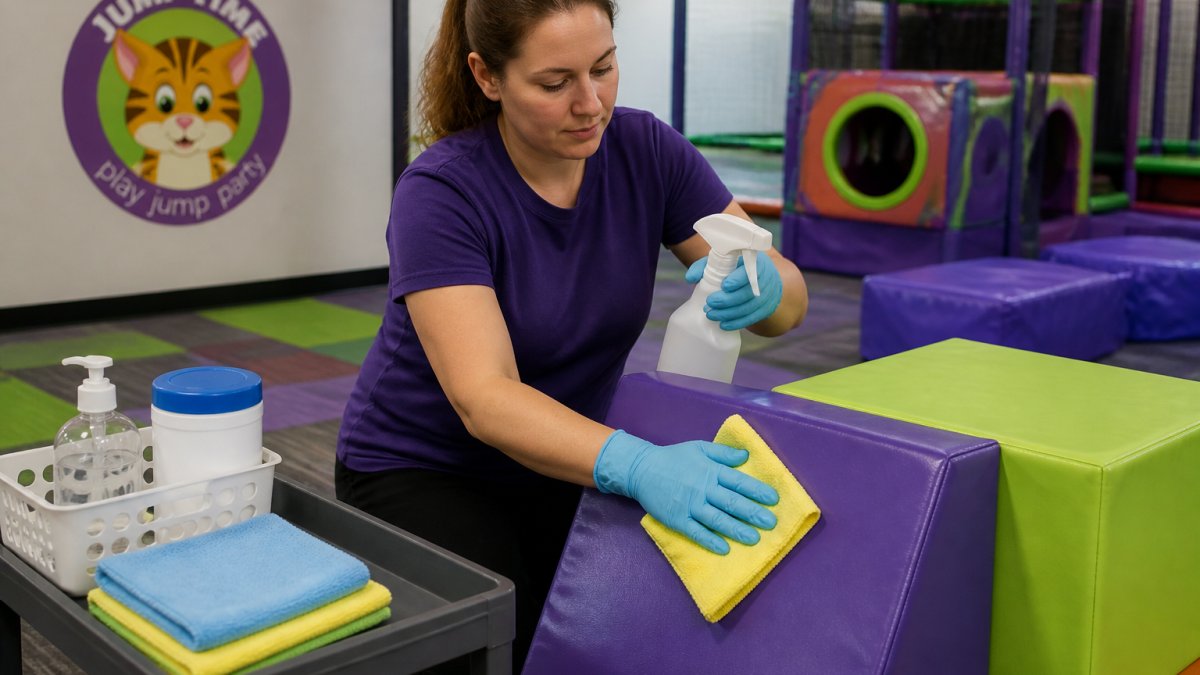
Different materials need different methods. Color-coded microfiber cloths help keep restroom cleaning separate from play equipment.
Hard Surfaces: Slides, Climbing Structures, and Frames
- Clear children from the area.
- Wipe loose dirt with a damp microfiber cloth.
- Apply the sanitizer and let it sit for the full contact time.
- Wipe dry with a clean cloth.
- Check rails and handles for sticky residue.
How to Clean Soft Play Equipment and Padded Surfaces
- Vacuum crumbs and debris from seams.
- Wipe vinyl padding with a mild soap solution.
- Sanitize with a product safe for vinyl and foam.
- Rinse with a clean damp cloth to remove residue.
- Dry fully before children return.
Soaking foam padding can trap moisture inside and grow mold, so a damp cloth is preferable to a soaked one.
How to Sanitize a Ball Pit: Balls, Walls, and Floor
A ball pit needs the most attention because every ball is a shared surface touched by hands, faces, and mouths. Treat it as a full teardown job, not a wipe-down. Work in a fixed order, empty, sort, wash, rinse, dry, sanitize the shell, refill, so nothing gets skipped on a busy day.
Step 1: Empty and Sort the Balls
- Clear children from the area and post a staff member at the entrance.
- Scoop balls into mesh laundry bags or a dedicated rolling bin, never a trash bag, which traps moisture.
- Sort out cracked, chewed, or crushed balls and discard them; damaged balls hold water and germs and can’t be cleaned effectively.
- Count the balls as you bag them so you can confirm the full set returns to service.
Step 2: Wash and Rinse the Balls
- Wash: fill a bin with warm water and a mild, fragrance-free soap, or use a product labeled for children’s play equipment at the dilution on the label. Agitate the mesh bags in the solution so water reaches every ball.
- Rinse: rinse the bags under running water until no suds remain. Residue left on balls ends up on children’s hands.
- Sanitize (optional but recommended): apply an EPA-registered sanitizer at the label dilution, then let the balls sit for the full contact time before rinsing again if the label requires it.
Never mix bleach with ammonia-based cleaners or with vinegar. The combination releases dangerous fumes in an enclosed play area. Use one product at a time and rinse between steps.
Step 3: Dry the Balls Completely
Spread the balls in a single layer on mesh racks, clean towels, or a slatted drying rack in a ventilated area. Turn them once so both sides dry. Damp balls grow germs, smell musty, and leave a film on the pit floor. Do not refill until every ball is dry to the touch, a common shortcut that undermines the whole job.
Step 4: Clean the Pit Shell
- Walls and padding: vacuum seams and corners, wipe with a mild soap solution, then sanitize with a product safe for vinyl and foam. Use a damp cloth, not a soaked one, so foam doesn’t trap moisture.
- Top rails and entry edges: these are the highest-touch points, wipe and sanitize them last so they stay wet for the full contact time.
- Floor: vacuum, then mop with a child-safe cleaner and let it dry completely before refilling.
Step 5: Refill and Inspect
Return the dried balls to the pit, confirm the count matches what you bagged, and check the shell for tears, loose screws, or worn padding before reopening.
Schedule ball-pit teardowns for the end of the day or a slow morning. A full wash, rinse, and dry cycle takes hours, and rushing the drying step is a common reason pits smell.
Your Indoor Playground Cleaning Checklist
Use this indoor playground cleaning checklist to keep daily and deep-cleaning tasks on track.
| Task | Frequency | Focus |
|---|---|---|
| Wipe high-touch surfaces | Daily, several times | Rails, handles, panels |
| Vacuum soft play seams | Daily | Crumbs, debris |
| Sanitize slides and frames | Daily | Contact time met |
| Wash ball pit balls | Weekly or as needed | Full dry before refill |
| Deep clean padding and foam | Monthly | Seams, corners |
| Inspect for damage | Daily | Tears, loose parts |
How Often Should Indoor Play Centers Be Cleaned?
High-touch surfaces need cleaning several times a day during busy hours, with a full sanitizing pass at least once daily. Soft play and ball pits need deeper cleaning on a weekly or monthly schedule, depending on traffic.
For a closer look at setting a realistic schedule, see how often indoor play centers should be cleaned. Busy weekends and party days call for extra passes, not the same routine as a quiet Tuesday.
Drying, Inspecting, and Reopening After Sanitizing
Reopening is where most cleaning routines quietly fail. A surface that looks dry can still be wet in seams, under padding, or inside foam, and a surface that looks clean can still carry residue. Use a fixed set of checks before any play area goes back into service. The facility policies cover the hygiene and safe reopening standards behind these checks.
Drying Criteria
- Hard surfaces: dry to the touch with no visible film, streaks, or puddles. Wipe with a clean microfiber cloth if the label requires a final wipe.
- Vinyl and padded surfaces: run a dry cloth along seams and corners, if the cloth comes away damp, it isn’t dry.
- Foam: press gently; if moisture wicks out, keep it out of service longer. Foam that stays damp grows mold and breaks down faster.
- Floors: no standing water and no slick spots. Slips are the most common reopening injury.
- Balls: every ball dry to the touch before refill, as covered in the ball-pit section.
Residue Checks
- Smell test: a strong chemical odor means the area needs more ventilation before children return.
- Touch test: a sticky or slippery feel on rails and handles means residue is left behind, rinse and dry again.
- Visual check: streaks, white haze, or color fading on vinyl signal too strong a solution or too long a contact time.
Inspection Before Reopening
- Check for tears, loose screws, exposed staples, and worn padding.
- Confirm no chemical residue, puddles, or damp spots remain.
- Verify all barriers and signage are back in place.
- Confirm staff have logged the cleaning pass and the products used.
- Walk the area once as a child would, crawl height, slide exit, ball-pit entry, to catch anything a standing check misses.
Reopening Standard
Reopen only when surfaces are dry, residue-free, and inspected, and when the space has been ventilated per the product label. Follow the jump rules to keep equipment safe once play resumes. If any check fails, keep the area closed and repeat the relevant step.
Drying, residue checks, and inspection are not optional extras, they are the difference between a cleaned play area and a safe one. Build them into the checklist so they happen every time, not just when someone remembers.
Booking a Clean, Safe Play Session at Jump Time
Keeping play equipment clean takes real work. Jump Time is a family-owned indoor play center with a clean, climate-controlled space featuring bounce houses, inflatable slides, an indoor play structure, and a toddler soft play area. Contact us with questions about cleaning or to book a visit. Check pricing before you book a play session.
Frequently Asked Questions
What cleaning products are safe for indoor play equipment?
Stick to products labeled for use on children’s play equipment and follow the dilution and contact time on the label. A mild soap-and-water mix handles everyday cleaning, while an EPA-registered disinfectant handles germs after illness outbreaks. Avoid bleach on vinyl or fabric unless the manufacturer approves it, since it can crack and fade the material. Always rinse food-contact and toddler surfaces and let them dry fully before kids return.
How long should equipment dry after sanitizing?
Let every surface air-dry completely before reopening, because wet vinyl and fabric stay slippery and can hold moisture that feeds mildew. Most sprays need the contact time on the label, often a few minutes, then a full dry. Use fans or open doors to speed drying on padded equipment, and check seams and crevices where water pools. If a surface still feels damp, keep kids off it.
How often should indoor play equipment be cleaned?
High-touch surfaces like rails, slides, and ball pit edges should be wiped down daily, with a deeper clean weekly and a full deep clean monthly. Ball pits need individual balls washed on a rotating schedule and a full pit clean regularly. Increase frequency during flu season or after a reported illness. A written schedule posted for staff keeps the routine consistent.
How do you clean soft play equipment without damaging it?
Vacuum loose debris first, then wipe vinyl and padded surfaces with a damp microfiber cloth and a mild cleaner approved for the material. Don’t soak seams or saturate foam, since trapped moisture causes mildew. Spot-clean fabric with a manufacturer-approved cleaner and let it air-dry. Check stitching and covers after each clean, and replace torn covers before they expose foam.
Clean equipment is not a nice extra. It is the baseline for a safe, fun visit. If you want a play space that takes surface hygiene seriously, get started with Jump Time and book a clean, safe play session for your family today.

Recent Comments