
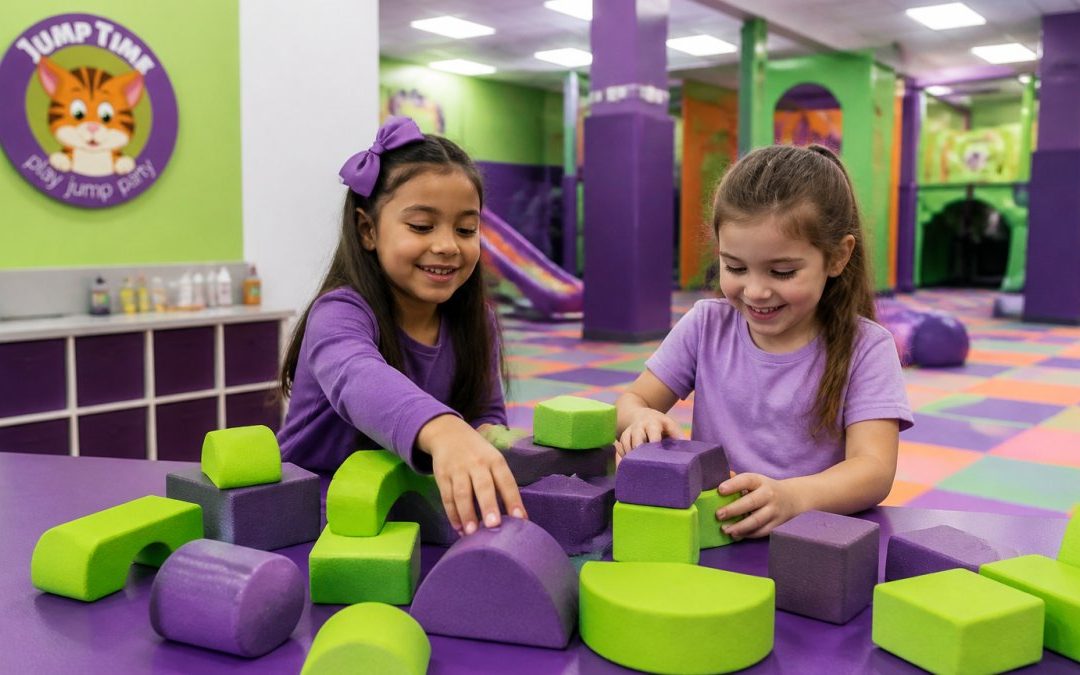
Table of Contents
- Why Indoor Venues Matter for School Field Trips
- Indoor Field Trip Ideas for Elementary Students
- Indoor Field Trip Ideas for Preschoolers
- Field Trip Planning Checklist for Teachers
- School Field Trip Schedule Template
- How to Choose the Right Indoor Venue
- Keeping Students Engaged During Your Visit
- Conclusion
- Frequently Asked Questions
Last Updated: October 14, 2026
Why Indoor Venues Matter for School Field Trips
Students who visit engaging indoor spaces show improved focus and better behavior for weeks afterward, the novelty keeps them motivated to learn.
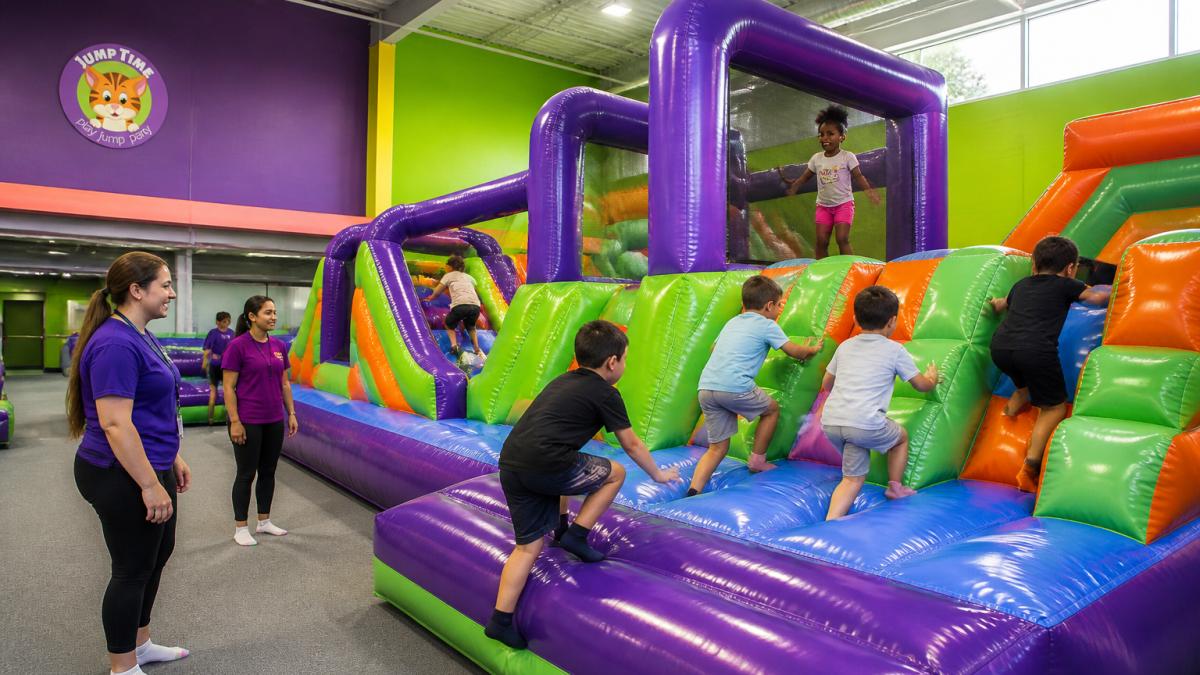
Jump Time offers a clean, climate-controlled indoor play center designed for group visits, with bounce houses, obstacle courses, inflatable slides, and an indoor play structure that keeps students active throughout.
Book your group visit on a weekday morning when the facility is less crowded. Your students will have more space to explore and move freely, making the experience safer and more enjoyable.
Indoor Field Trip Ideas for Elementary Students
Elementary students thrive on active, hands-on experiences. The best indoor venues for school field trips at this age combine movement with learning. Students need opportunities to climb, jump, explore, and interact with peers.
Hands-On Learning Spaces
Museums and science centers offer interactive exhibits where students touch displays, run simple experiments, and see how things work, with staff often ready to guide groups.
Libraries with storytelling programs and interactive reading areas work well for younger grades, and aquariums and animal exhibits teach biology and conservation.
Arts and craft centers let students create projects they take home, giving them a tangible memory of the trip.
Active Play and Recreation Centers
Indoor play centers like Jump Time provide structured physical activity in a safe environment, where climbing, jumping, and obstacle courses improve coordination and build confidence.
Active play venues work especially well for field trips because:
- Teachers can supervise larger groups safely
- All students participate at their own level
- Physical activity reduces behavior problems
Jump Time’s commercial-grade equipment is built for group visits, and our facility handles multiple classes at once with space for every student to stay active.
Indoor Field Trip Ideas for Preschoolers
Preschoolers need shorter, less stimulating visits, 60-90 minutes works best, in spaces designed for their size and developmental stage.
Soft play areas with age-appropriate equipment keep preschoolers safe while they explore, preventing overwhelming sensory input while letting kids move freely.
Jump Time features a dedicated toddler soft play area with equipment scaled to their size, designed to keep younger children engaged without overstimulation.
Preschool field trips succeed when they’re short, focused, and age-appropriate. Avoid overstimulating environments. Choose venues that let kids explore at their own pace.
Field Trip Planning Checklist for Teachers
Teachers who prepare thoroughly report fewer behavior issues and higher student satisfaction.
Before You Book
Start planning at least 2-3 weeks ahead, and contact the venue to confirm availability for your group size and date.
Key planning steps:
- Confirm the venue can accommodate your group
- Ask about group rates and what’s included
- Verify accessibility for students with mobility needs
Visit the venue yourself if possible to plan activities and spot potential issues before students arrive.
Communicate with parents early: send details on the venue, what to wear and bring, and the educational goals so families understand the trip’s purpose.
On the Day of the Trip
Arrive early to check in with staff and make sure chaperones know their assigned groups and responsibilities.
Assign chaperones to small groups. A ratio of one adult per 4-6 students works well for elementary grades.
Take photos and notes during the visit to support classroom follow-up; students remember more when they discuss the experience afterward.
Never assume students know how to behave in a new environment. Explicit instructions before entering prevent most problems. Spend 5 minutes reviewing expectations before the visit starts.
School Field Trip Schedule Template
A clear schedule keeps the visit organized and prevents wasted time.
| Time | Activity | Duration | Notes |
|---|---|---|---|
| 9:00 AM | Arrival and check-in | 10 minutes | Meet staff, bathroom break |
| 9:10 AM | Orientation and safety briefing | 5 minutes | Review rules and expectations |
| 9:15 AM | Free exploration (Group A) | 30 minutes | Rotate groups through areas |
| 9:45 AM | Free exploration (Group B) | 30 minutes | Rotate groups through areas |
| 10:15 AM | Structured activity or demo | 15 minutes | Staff-led activity if available |
| 10:30 AM | Snack and rest time | 15 minutes | Bathroom break, hydration |
| 10:45 AM | Final free play or activity | 20 minutes | Last chance to explore |
| 11:05 AM | Wrap-up and departure prep | 10 minutes | Gather belongings, bathroom |
| 11:15 AM | Departure | , | Return to school |
Adjust timing for your venue and group: younger students need more breaks, older students can handle longer activity blocks.
How to Choose the Right Indoor Venue
Most ranking pages for this topic are city-by-city directories that help you find venues but not compare them. Score each candidate against the six criteria below, and the right choice usually becomes obvious after two or three site visits or phone calls.
1. Group Capacity and Booking Lead Time
Ask two numbers up front: the maximum group size the venue can host at once, and how far ahead school groups must reserve. Museums and science centers often book several weeks to a few months out, especially in spring, while play centers and recreation facilities can often take a class on shorter notice during weekday mornings.
2. Chaperone Ratios and Supervision Sightlines
Districts set their own chaperone minimums, and many venues publish theirs as a booking condition. A workable range for elementary groups is one adult per 4-6 students, with closer ratios for preschool and early grades. Then walk the space: can one adult see the whole play floor from a single point?
3. Accessibility and Sensory Needs
This is where most directories stop and where your planning should start. Confirm, in writing if possible:
- Step-free routes from the bus drop-off to the main activity floor, and elevator access if activities span floors
- Whether wheelchairs and walkers can move through the activity areas, not just the lobby and restrooms
- A quiet or low-stimulation space a student can use to decompress, and whether it can be reserved
Ask whether the venue can adjust sound, lighting, or crowd flow for your group. Many can, but only if you ask at booking rather than on arrival.
4. Safety, Supervision, and Emergency Procedures
Request the venue’s written safety policy before you commit. You want to know:
- How injuries and medical events are handled, and whether staff are CPR and first-aid certified
- The reunification procedure if a student is separated from the group
- Whether there is a designated assembly point and a practiced evacuation plan
A venue that hands you a written policy without being asked has usually hosted school groups many times.
5. Cost Structure and What’s Included
Group rates are usually quoted per student with a minimum headcount, and the total shifts with add-ons. Ask for the full picture: per-student rate, minimum charge, chaperone pricing, deposit requirements, cancellation and rescheduling policy, and whether the venue can invoice your school directly. Two venues with similar per-student rates can end up far apart once minimums and chaperone charges are counted.
6. Curriculum Fit and Learning Outcomes
Match the venue to a specific grade band and subject rather than a broad “educational” label. A science center’s guided lab may align with a physical science unit, a children’s museum’s exhibits may support early literacy and motor skills, and a play center supports physical development, turn-taking, and social skills.
Build a one-page comparison sheet with these six criteria as columns and your three candidate venues as rows. Fill it in during or right after each site visit, while the details are fresh. The gaps in the sheet tell you which questions to ask next.
Jump Time is built for group visits: a climate-controlled indoor play center with inflatables, an indoor playground, a toddler soft play area, an arcade, and a full kitchen, all on one floor with open sightlines. We’ll walk you through capacity, chaperone expectations, accessibility, and accommodations before you book, so you can compare us against the rest of your shortlist on the same criteria.
Keeping Students Engaged During Your Visit
Engagement on an indoor field trip is mostly a logistics problem: students disengage when they are waiting, crowded, or unsure what to do next. Fix those three conditions and the learning follows.
Give Every Student a Job
Assign roles before you arrive, timekeeper, materials carrier, question-asker, photographer, line leader, and rotate them at each transition so every student holds at least one. A scavenger hunt or observation sheet gives students something to look for in a space that can otherwise feel like pure free play; keep it to five to eight items.
Use Rotations to Control Crowding
If the venue has distinct zones, split your class into groups and rotate on a fixed schedule rather than letting everyone move freely, crowding is the fastest way to lose attention and creates safety problems. Ask at booking whether they can stagger your group with any others on site that day; weekday mornings are typically quietest.
Build in a Mid-Visit Reset
Plan one seated break roughly halfway through, ideally with a snack and restroom stop, it is what makes the second half work. Younger students need the reset sooner, often within 45 minutes. A full kitchen on site simplifies snack logistics and gives you a fixed meeting point.
Turn Observation into Discussion
Ask questions about what students are doing, not what they remember: “What did you have to do differently to get across that obstacle?” or “What made that structure stable?” For older grades, have students note one thing to look up back in class, that note becomes your follow-up lesson.
Plan for the Students Who Opt Out
Not every student will want to climb, jump, or join a group game, and forcing participation backfires. Identify a quieter zone in advance, an arcade area or seating corner, where a student can break without leaving supervision. Tell chaperones where it is and who may use it; a student who steps out for five minutes usually rejoins on their own.
Capture the Visit for the Classroom
Take photos and short notes during the trip, with your school’s photo policy in mind, then use them in class for a recall activity, writing prompt, or chart of what students noticed. The follow-up turns a fun outing into a learning experience and justifies the trip to administrators and families.
Engagement indoors comes down to three things: every student has a job, no group is ever crowded, and there is one planned reset. Handle those and you will spend your energy on teaching instead of crowd control.
At Jump Time, the layout supports this kind of visit: separate zones for inflatables, an indoor playground, a toddler soft play area, and an arcade, plus a full kitchen for snack breaks. Ask at booking about staggering your group and quieter areas for students who need a break.
Conclusion
The best indoor venues for school field trips combine safety, engagement, and learning. Jump Time brings all three together in a family-owned facility designed specifically for group visits. Our commercial-grade equipment, climate-controlled environment, and experienced staff make planning easy. Book your group visit at Jump Time and give your students an active, memorable learning experience that works no matter the weather.
Frequently Asked Questions
What should teachers look for when choosing the best indoor venues for school field trips?
Look for venues that match your students’ age group and learning objectives. Check that the facility maintains high safety and cleanliness standards, offers adequate supervision ratios, and provides accessible areas for all students. Consider group size capacity, booking flexibility, and whether the venue aligns with your curriculum. Ask about their experience hosting school groups and request references or reviews from other educators.
How long should a school field trip to an indoor venue last?
Most indoor field trips work best between 2 to 3 hours, including travel time. This length allows students to fully explore activities without losing focus or becoming overtired. Younger students (preschool and early elementary) may do better with shorter 1.5 to 2-hour visits. Factor in setup time, instruction, active play, and a brief wind-down period. Always coordinate timing with your venue to ensure your group gets the full experience without feeling rushed.
What are some engaging indoor field trip ideas for preschoolers?
Preschoolers thrive at venues with soft play areas, age-appropriate obstacle courses, and interactive sensory activities. Look for facilities with toddler-focused zones featuring slides, climbing structures, and ball pits. Storytime sessions, music and movement activities, and hands-on exploration spaces work well too. Avoid overstimulation by choosing venues with quieter areas where children can take breaks. Keep activities short and rotational so younger students stay engaged without becoming overwhelmed.
How do you plan an indoor field trip for a large school group?
Start by confirming the venue can accommodate your group size and has adequate space and staff. Create a detailed schedule with time blocks for each activity, transitions, and breaks. Assign chaperones to small groups and brief them on supervision responsibilities and safety rules beforehand. Prepare students with pre-trip lessons about what to expect and behavioral expectations. Arrange transportation logistics early, communicate all details to parents, and have a backup plan in case of unexpected issues. Follow up with a post-trip activity to reinforce learning.
Recent Comments