
Last Updated: November 2, 2026
Quick Summary
The big air vs urban air comparison comes down to a simple split: Big Air leans on open jump space and a tighter activity list, while Urban Air builds a larger multi-attraction campus with more variety under one roof. Neither wins everywhere, so the right pick depends on your kids’ ages, how long you plan to stay, and whether you want one headline activity or a full afternoon of options.
- Big Air offers a narrower, focused lineup while Urban Air offers a broader mix of attractions.
- Age, height, and supervision rules are set per attraction and per location, so confirm by phone before booking.
- Ask whether the toddler area is physically divided from the main floor so little ones play separately.
- Book online and complete waivers ahead of arrival, and arrive at opening for the least crowded hour.
- Before booking a party, ask what the package includes per child and the deposit and cancellation terms.
Table of Contents
- Big Air vs Urban Air: How the Two Parks Compare at a Glance
- What Activities Do Big Air and Urban Air Offer?
- Big Air Age Requirements and Height Rules to Check First
- Urban Air Activities for Toddlers and Younger Children
- How Long Is an Indoor Play Center Visit Length, Really?
- Indoor Play Center Safety Tips for Parents and Supervisors
- Birthday Parties and Group Visits: What to Ask Before You Book
- Plan Your Family Outing to Jump Time in Villa Rica
- Frequently Asked Questions
Big Air vs Urban Air: How the Two Parks Compare at a Glance
The big air vs urban air parks comparison comes down to a simple split: Big Air leans on open jump space and a tighter activity list, while Urban Air builds a larger multi-attraction campus with more variety under one roof. The honest answer is that neither wins everywhere. The right pick depends on your kids’ ages, how long you plan to stay, and whether you want one headline activity or a full afternoon of options.
Two locations under the same name can carry different attractions, different layouts, and different rules. Treat any chain-level comparison as a starting point, not a guarantee.
The Comparison Table: Attractions, Ages, and Cost Structure
| Factor | Big Air | Urban Air |
|---|---|---|
| Core draw | Open jump and inflatable play | Multi-attraction adventure format |
| Activity range | Narrower, focused lineup | Broader mix of attractions |
| Best age fit | Younger to middle grades | Wide range, toddler through teen |
| Cost structure | Base admission plus add-ons | Base admission plus attraction add-ons |
| Party setup | Standard party packages | Tiered party packages |
| Consistency | Varies by franchise | Varies by franchise |
Read that last row twice. The biggest mistake parents make is assuming a review of one location describes the one near them.
What Activities Do Big Air and Urban Air Offer?
Both chains center on active indoor play, but they package it differently, and the difference shows up the moment you walk the floor.
U.S. Consumer Product Safety Commission guidance on playground and inflatable safety is worth a read before any visit, because what matters most is not the attraction list but how well each facility maintains and supervises it.
Inflatable and Open Jump Areas
If your child needs structure to stay engaged, ask which specific inflatables a location runs before you drive out. If your child just wants room to move, open jump space does the job.
A concrete way to compare: ask each location for its attraction list by name, then map your kids against it. “Obstacle course, slide, open floor” tells you more than “inflatable play.” Franchise locations vary, so the named list at the location near you is the only list that matters.
The Eligibility Matrix Competitors Skip
Age, height, and ability requirements are set per attraction and per location, so check them before you visit. Build your own matrix before you commit by asking three questions per attraction:
- Minimum age to use it at all
- Height minimum (and whether it is measured with or without shoes)
- Adult supervision requirement, on the floor, eyes-on from the side, or not required
Then sort your group into three buckets: toddlers and preschoolers, early elementary, and older kids and teens. Confirm the matrix by phone before you book.
Big Air Age Requirements and Height Rules to Check First
Age and height rules are the single most common source of wasted trips. Call ahead and ask three questions: the minimum age for open jump, any height minimums on specific inflatables, and whether a supervising adult must stay on the floor.
Confirm age and height rules before you book.
You can review the jump rules we apply at our own facility to see what a clear published rule set looks like.
Urban Air Activities for Toddlers and Younger Children
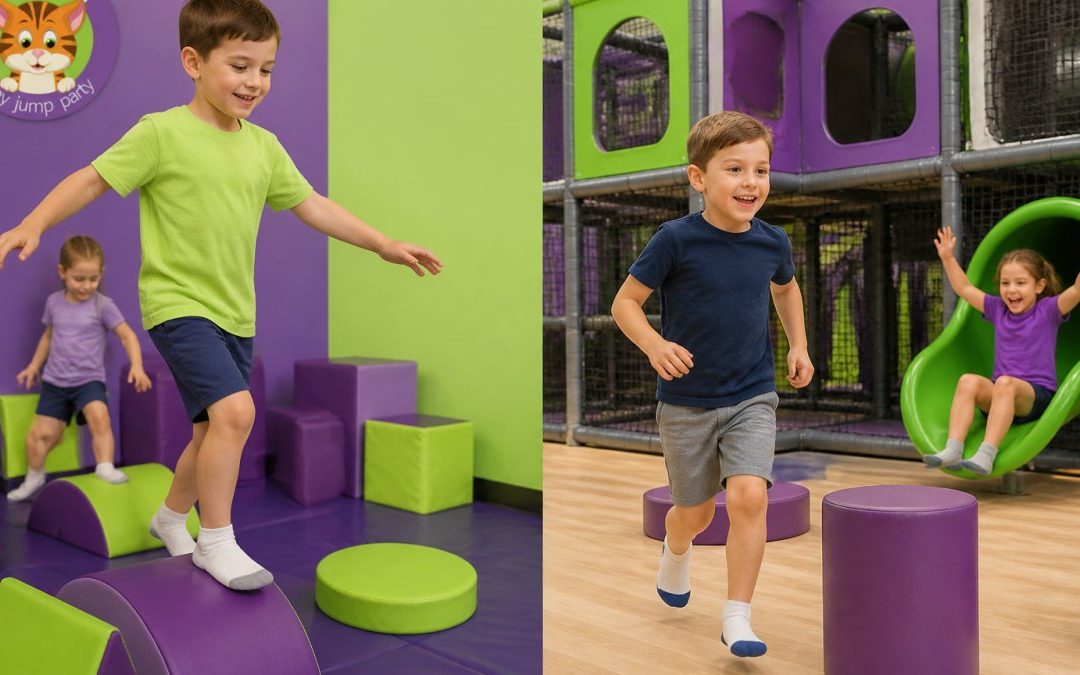
Ask any indoor play venue whether the toddler area is physically divided from the main floor, so toddlers can play without older kids moving through the same space.
For families comparing options close to home, our indoor play areas for toddlers in Villa Rica page covers our toddler soft play area.
How Long Is an Indoor Play Center Visit Length, Really?
Younger children tire faster, and mixed-age groups often stretch visits because kids rotate between attractions. The shape of your visit matters more than any average, so plan around your group’s energy.
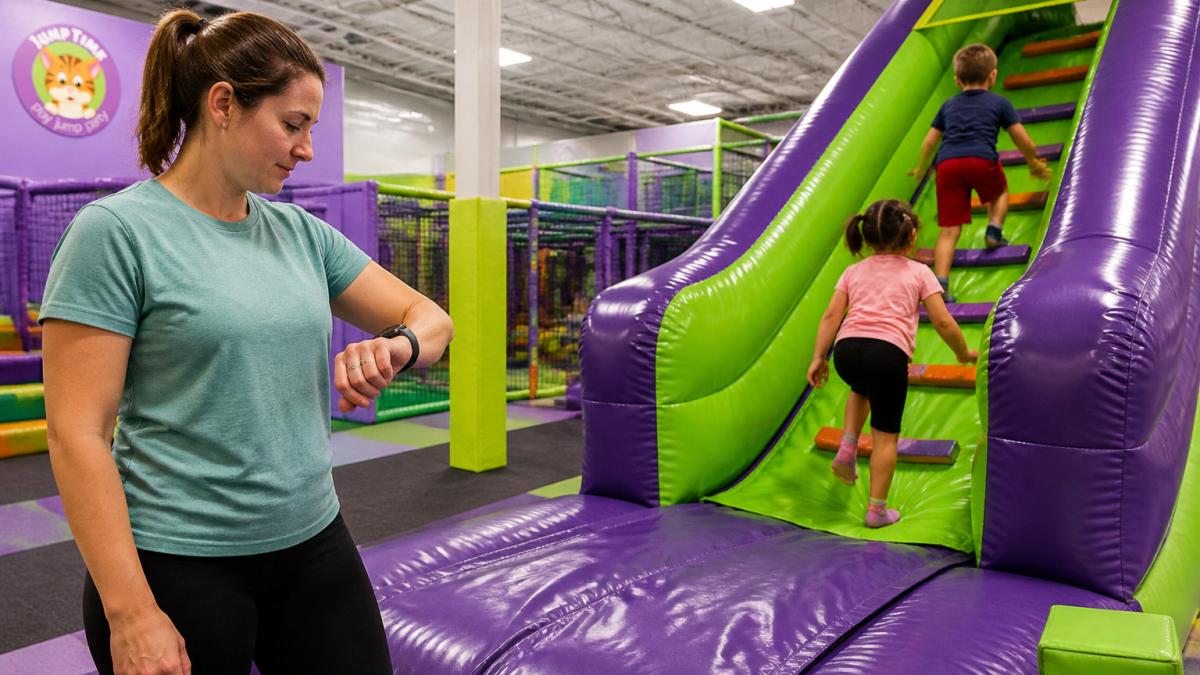
Planning for these sessions requires balancing the duration of active play with travel time, which becomes easier when you identify the best indoor play areas within your immediate vicinity.
Plan Around Energy, Not the Clock
Younger children tire faster than older ones, so a group of toddlers may be done well before a group of older kids. Knowing your exit point in advance prevents the meltdown-at-the-door scenario. A workable pattern:
- First 15 minutes: walk the floor together and let each child pick a starting attraction. This prevents the “I don’t know what to do” stall.
- Middle hour: let them rotate freely. Resist the urge to herd.
- Final 20 minutes: announce the last activity before you leave. A countdown beats a surprise exit every time.
Peak Times, Wait Expectations, and Booking Advice
Crowding can change how long a visit feels, so weekday mornings are often calmer than weekends at most indoor play venues.
Booking advice that follows from this:
- Book online and complete waivers ahead of arrival. Online booking and waivers are available 24/7, so your group can arrive ready to play.
- Arrive at opening. The first hour is the least crowded and the most productive for younger kids.
- Ask about capacity limits before you arrive, so you know what to expect.
Indoor Play Center Safety Tips for Parents and Supervisors
Indoor play center safety comes down to adult supervision and rule enforcement. Keep an adult watching your young children, and walk the floor before you settle in.
A common mistake is treating a play center as drop-off childcare. It isn’t. Your child’s supervision is yours unless the venue explicitly runs a supervised program.
American Academy of Pediatrics advice on active play and injury prevention reinforces the same point: active play is valuable, and adult attention is what keeps it safe.
Birthday Parties and Group Visits: What to Ask Before You Book
Party bookings are where parents often get surprised. Ask five things before you commit: what the package includes per child, whether food is bundled or added, how many party rooms you get and for how long, the deposit and cancellation terms, and whether waivers can be completed online ahead of arrival.
That last one saves real time, since waivers can be completed online ahead of arrival.
For current package details, our pricing page lays out what each option covers so you can compare before calling.
Plan Your Family Outing to Jump Time in Villa Rica
Comparing big air vs urban air parks is useful, but the deciding factor is usually drive time, age fit, and how clean and calm the space feels when you walk in. Jump Time is a family-owned indoor play center in Villa Rica built for exactly that: bounce houses, obstacle courses, inflatable slides, an indoor play structure, and a toddler soft play area, all in a climate-controlled facility with four party rooms seating up to 35 each. Booking and waivers run online 24/7, so your group arrives ready to play instead of standing in line with a clipboard.
If you’re planning a celebration, our parties and events page covers how to reserve a room and what to expect. For a straight side-by-side of local options, see our comparison.
Frequently Asked Questions
What is the difference between Big Air and Urban Air?
The two chains share a broad model: paid admission, open jump and inflatable-style attractions, party packages, and age-based rules. The differences show up in specifics. Neither chain is uniform across locations, so check the exact location’s attraction list, age requirements, and add-on fees before you go. For families who want a simpler, younger-child-focused indoor play center, a local venue like Jump Time in Villa Rica is worth comparing.
Which is better for younger kids, Big Air or Urban Air?
It depends on the location. Before booking any venue, call or check the location page for toddler hours, height requirements, and whether an adult must accompany small children. A venue built around younger guests, like Jump Time’s toddler soft play area, removes much of that guesswork.
How long should you plan to stay at an indoor play center?
Younger children tire faster than older ones, while mixed-age groups often stretch visits as kids rotate between attractions. Build in time for check-in and waivers, and plan your arrival outside peak hours.
What should parents check before visiting Big Air or Urban Air?
Start with the location’s attraction list and age or height requirements, since these differ by park. Confirm admission and add-on costs, and ask about supervision rules, waiver requirements, and cleaning schedules. Online booking and waivers are available 24/7 at Jump Time. Indoor play center safety tips apply everywhere: review the rules with your kids, keep younger children within arm’s reach, and note where staff are stationed before you let them loose.
The gap between a good outing and a stressful one is usually preparation, not the venue. Jump Time gives families a clean, climate-controlled indoor play center with commercial-grade equipment, a soft play area for the youngest guests, and four party rooms that make group bookings simple. Get started with Jump Time and turn a rainy Saturday into the outing your kids ask about all week.

Recent Comments