
Table of Contents
- How to Match Sensory Activities to Your Child’s Profile
- Sensory-Friendly Activities at Home: Setup, Materials, and Cleanup
- Tactile Play: Bins, Dough, Slime, and Sand
- Heavy Work Activities for Kids: Proprioceptive Input That Organizes
- Calming Activities for Sensory Overload
- How Long Should a Sensory Activity Last?
- Safety, Supervision, and Knowing When to Get Help
- Frequently Asked Questions
Last Updated: October 21, 2026
How to Match Sensory Activities to Your Child’s Profile
Every child processes touch, sound, movement, and sight differently, which is why activities for sensory sensitive children work best when they match your child’s own sensory profile. At Jump Time, we see this every day in our play areas, where some kids dive straight into the action and others need a quiet corner first.
Sensory processing is how the brain takes in information from the senses and turns it into a response. Some children take in too much, some too little, and some swing between the two.
A common mistake is copying another family’s routine. What calms one child can overwhelm another. Start by watching, not by buying.
Seekers, Avoiders, and the In-Between
Most children lean toward one of three patterns:
- Sensory seekers want more input. They crash, spin, squeeze, and touch everything.
- Sensory avoiders pull back. Loud rooms, tags, and messy hands bother them fast.
- The in-between group shifts by the day. A child can seek movement in the morning and avoid noise by dinner.
Your job is to notice the pattern, then pick activities that feed it or gently stretch it. A seeker thrives on heavy work and big movement. An avoider does better with slow, predictable input and an easy exit.
Watch for Signs an Activity Is Too Much
Stop and reset when you see:
- Covering ears or eyes
- Turning away or hiding
- Sudden tears or meltdowns
- Freezing in place
- Repeated “no” or pushing materials away
These are signals, not misbehavior. Cut the activity short and offer a calm space. A quiet corner with soft seating often does more than pushing through.
Set up the calm corner before the activity starts, not after trouble begins. A child who knows where to retreat will use it sooner and recover faster.
Sensory-Friendly Activities at Home: Setup, Materials, and Cleanup
Sensory-friendly activities at home work best when setup takes under five minutes and cleanup is planned in advance.
Here is a simple setup checklist we recommend to families:
- Choose one activity, not three
- Cover the floor with a mat or sheet
- Put materials in a shallow tray
- Keep wipes and a towel within reach
- Set a timer so the ending is predictable
- Agree on a calm corner ahead of time
Predictability lowers the load. A child who knows what comes next spends less energy bracing for surprises.
Low-mess options exist too. A sealed bag of colored beans, a tray of dry sand, or a bin of shredded paper gives tactile stimulation without a full cleanup.
Tactile Play: Bins, Dough, Slime, and Sand
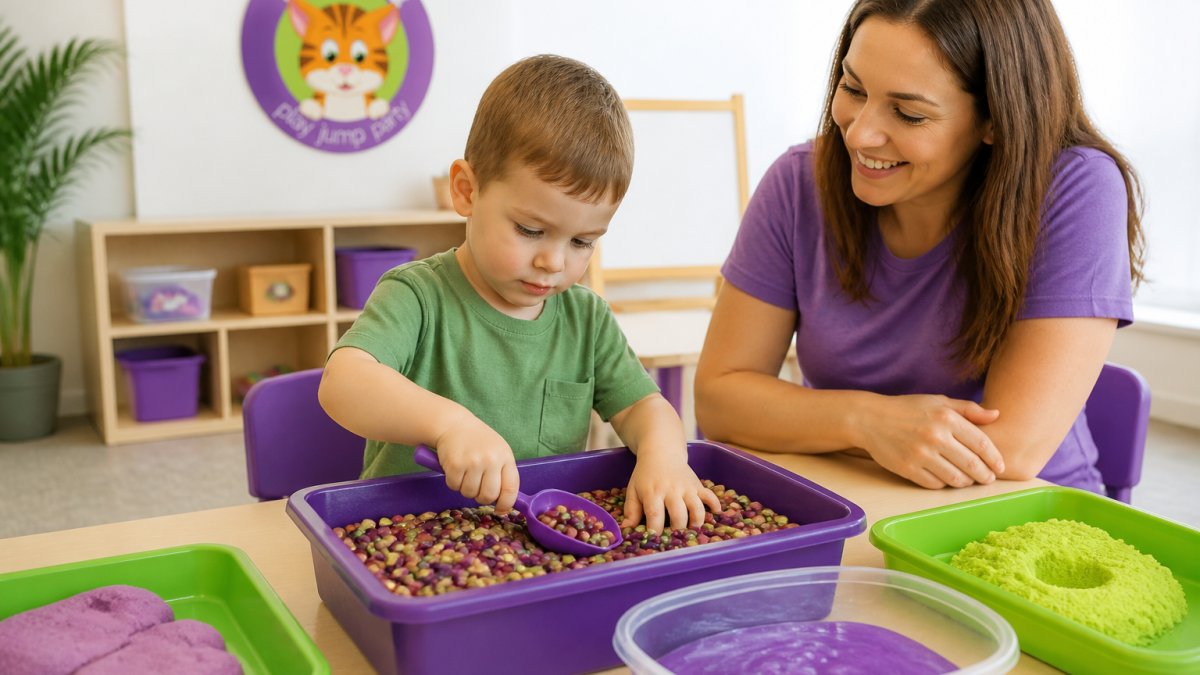
Tactile play builds fine motor skills and gives the hands steady feedback. It also lets a child control the input, which matters for kids who avoid mess.
Dry Sensory Bins
- Materials: a shallow plastic tray or bin, 2 to 4 cups of colored rice, dried beans, or play sand, a scoop, a small cup, and a washable mat.
- Setup time: under 3 minutes.
- Age range: 3 and up for loose rice or beans; 18 months and up for larger, edible-safe items like uncooked pasta under close supervision.
- Steps: lay the mat, pour the filler into the tray no more than halfway, add two tools, and let your child scoop and pour.
- Easier: use larger pasta shapes or pom-poms so small hands can grasp them.
- Harder: add hidden objects to find or a measuring cup for pouring practice.
Playdough
- Materials: store-bought or homemade playdough, a plastic knife, a rolling pin, and cookie cutters.
- Setup time: under 2 minutes.
- Age range: 2 and up.
- Steps: offer one color at a time to avoid overwhelm, then add tools gradually.
- Easier: warm the dough in your hands first so it is soft and easy to squeeze.
- Harder: add a garlic press or a toy extruder for resistance.
Slime
- Materials: a sealed container of slime, a tray, and wipes.
- Setup time: under 1 minute.
- Age range: 5 and up, and only for children who no longer mouth objects.
- Steps: keep it on the tray, stretch and fold it, and return it to the container when done.
- Easier: start with a firmer slime that does not drip.
- Harder: add beads or foam balls for texture.
- Cleanup: slime lifts off most surfaces; keep it away from fabric and hair.
Shaving Cream
- Materials: a can of shaving cream, a tray or a washable table, and a towel.
- Setup time: under 2 minutes.
- Age range: 2 and up.
- Steps: spray a small mound onto the tray and let your child spread it with hands or a craft stick.
- Easier: offer a craft stick first so hands stay clean.
- Harder: add a few drops of food coloring for mixing.
- Cleanup: wipe with a damp towel, then dry.
Ice Excavation
- Materials: a container of frozen water with small toys inside, a spray bottle of warm water, and a tray.
- Setup time: freeze overnight; active play takes 10 to 15 minutes.
- Age range: 3 and up.
- Steps: set the ice block on the tray and let your child spray and pick at it.
- Easier: use warm water only, no tools.
- Harder: add a plastic hammer or dropper.
- Cleanup: pour the meltwater out and dry the tray.
Start with dry materials for avoiders and wet, stretchy ones for seekers. Keep sessions short and let your child lead. If your child rejects a texture, offer the tool version first and try the hands-on version another day.
Small items like beans, rice, and beads are choking risks for children who still mouth objects. Supervise closely and store bins out of reach between sessions. Check dough and slime labels for allergens such as wheat or fragrance before use.
Heavy Work Activities for Kids: Proprioceptive Input That Organizes
Heavy work activities for kids push and pull against the body, which sends proprioceptive input to the muscles and joints. Many parents find this input calms a wound-up child faster than quiet time.
Simple options that need no equipment:
- Wall pushes for a slow count of ten
- Carrying a basket of laundry or books
- Animal walks: bear, crab, frog
- Pushing a loaded grocery cart
- Digging in the garden
- Climbing stairs with a backpack of soft toys
At our indoor play center, inflatable obstacle courses and climbing structures give kids this kind of push-and-pull input in a safe, padded space. The proprioceptive input from climbing and crawling through an obstacle course often leaves children more settled afterward.
Calming Activities for Sensory Overload
Calming activities for sensory overload lower the volume of input rather than adding more. The goal is fewer senses at once: dim light, quiet sound, slow movement.
Good choices include:
- Deep breathing with a pinwheel or bubbles
- Gentle yoga poses like child’s pose
- Slow rocking or swinging
- A weighted blanket or firm hug
- Soft music with the lights low
- Quiet time in a tent or blanket fort
Deep breathing works because it slows the body’s stress response. Make it playful: blow a cotton ball across a table, or hold a pinwheel and take slow breaths to spin it.
Calming activities work best before overload hits. Watch for early signs and offer a quiet option early, rather than waiting for a meltdown.
How Long Should a Sensory Activity Last?
A sensory activity should last about 10 to 15 minutes for most young children, and shorter for a child who is easily overwhelmed. Stop while your child is still enjoying it, not after they have had enough.
Watch the clock less than you watch the child. A seeker may happily go 20 minutes with movement. An avoider may be done in five. Both are fine.
The table below shows how we would plan a session:
| Activity Type | Typical Length | Best Time of Day | Watch For |
|---|---|---|---|
| Tactile bins | 10-15 min | Morning | Hand wiping, mouthing |
| Heavy work | 10-20 min | Before quiet tasks | Fatigue, frustration |
| Calming play | 5-10 min | After active play | Signs of boredom |
| Movement play | 15-20 min | Midday | Overstimulation |
Safety, Supervision, and Knowing When to Get Help
Supervision is the non-negotiable part of sensory play. Most injuries in home sensory setups come from small parts, water, or homemade mixtures, and each has a simple precaution.
Small Parts and Choking
- Keep bins of rice, beans, beads, and pom-poms away from children who still mouth objects.
- Choose larger fillers, such as uncooked pasta or crumpled paper, for children under 3.
- Store bins with lids out of reach between sessions.
- Supervise within arm’s reach the entire time.
Food-Based Play and Allergies
- Check dough, slime, and cloud-dough recipes for wheat, fragrance, and food dyes.
- Keep a separate set of tools for food-based play if your child has food allergies.
- Never let a child taste a play mixture, even one made from kitchen ingredients.
Water Play
- Keep water shallow, no more than a few inches, and never leave a young child alone with it.
- Empty tubs and buckets immediately after play.
- Use warm, not hot, water for ice excavation.
Homemade Mixtures
- Follow a tested recipe rather than improvising ratios.
- Store slime and dough in sealed containers and discard any that smell off or grow mold.
- Keep borax-based slime away from children who may put it in their mouths.
Movement and Climbing
- Clear a space before any jumping, rolling, or obstacle play.
- Use soft landing surfaces and keep furniture out of the path.
- Stay close during climbing and swinging.
When General Ideas Are Not Enough
Activity lists are a starting point, not a plan. Talk with your pediatrician or an occupational therapist if you notice:
- Meltdowns that get worse over weeks
- Avoidance that limits daily life, like refusing foods or clothing
- Trouble at school or with friends
- Sensitivity that seems to cause your child distress
- A pattern that does not improve with changes at home
An occupational therapist can help you build a plan matched to your child’s sensory needs. Activities at home support that plan; they do not replace it. If you are unsure whether a behavior is a sensory issue or something else, ask your pediatrician first.
Write down what you tried, how long it lasted, and how your child responded. A simple log gives a professional useful information and helps you spot patterns faster.
Frequently Asked Questions
What activities are good for sensory-sensitive children?
Start with activities that match your child’s sensory preferences rather than the ones that look most fun on paper. A sensory avoider often does better with low-mess tactile play like playdough or dry sand, quiet calming activities, and predictable routines. A sensory seeker usually needs more movement and heavy work activities for kids, such as wall pushes, carrying laundry, or obstacle courses. Build in a calm-down option nearby, keep sessions short at first, and add one new texture or movement at a time so you can see what actually helps.
How can I calm a child who is overwhelmed by sensory input?
Reduce input before you add anything. Move to a quieter room, lower the lights, and cut the noise. Offer deep pressure through a firm hug, a weighted blanket, or slow wall pushes, and try deep breathing or gentle rocking. Calming activities for sensory overload work best when they are familiar and practiced before a meltdown, not introduced in the middle of one. Give your child space and time, use short sentences, and avoid asking a lot of questions until the body has settled.
How long should a sensory activity last?
Most young children do well with 10 to 20 minutes of focused sensory play, and many need a break before that. Watch your child rather than the clock: if they are engaged and regulated, let it run a little longer; if they start avoiding the material, covering their ears, or getting silly and dysregulated, stop. Heavy work and movement sessions often work well in shorter bursts of 5 to 15 minutes. A calm-down activity may only need a few minutes to help.
How can I tell if a sensory activity is helping my child?
Look for changes in the body and behavior after the activity, not during it. Signs it is helping include slower breathing, looser shoulders, easier transitions, more eye contact, and your child returning to play on their own. Signs it is too stimulating include increased meltdowns, covering ears or eyes, refusing touch, or getting more wound up instead of settling. Track what you tried and how your child responded for a week or two so you can spot patterns and adjust.
Recent Comments