
Last Updated: November 10, 2026
Quick Summary
Climate controlled play keeps the room’s temperature, humidity, and air movement actively managed so conditions stay comfortable year-round, regardless of the weather outside. That consistency lets kids stay active and engaged longer, and it means a play session can be planned like any other appointment.
- Climate control means active management of temperature, humidity, and air movement, not just summer AC and winter heat.
- Ask whether the temperature is zoned or run by one thermostat for the whole building.
- Fresh-air intake separates a ventilated room from a sealed one, so ask about it.
- Comfort changes behavior: kids who are too hot or cold give up early.
- Indoor play solves the weather and supervision problems but does not replace outdoor time.
Table of Contents
- What Climate Control Means in Practice at a Play Area
- Benefits of Indoor Play Areas for Kids
- Indoor Play and Child Development
- Indoor Play for Toddlers: What Parents Should Know
- Safe Indoor Play Areas for Children: What to Look For
- Accessibility and Sensory Needs in Climate Controlled Spaces
- Trade-Offs and Limitations of Indoor Play
- Choosing the Right Climate Controlled Play Area for Your Family
- Frequently Asked Questions
What Climate Control Means in Practice at a Play Area
The benefits of climate controlled play areas start with a simple promise: the room stays comfortable no matter what the weather does outside. At Jump Time, we run a climate-controlled indoor facility in Villa Rica. That distinction matters more than most parents realize, because “climate controlled” is a phrase any venue can print on a sign.
Temperature, Humidity, and Air Quality Basics
Climate control is the active management of temperature, humidity, and air movement inside a building so conditions stay within a comfortable range year-round. In practice, that means a play area should feel neither stuffy in July nor drafty in January, and the conditions should hold steady from the front desk to the back corner.
Several systems do the actual work, and each one is worth asking about:
- Heating and cooling sized for the building and zoned so the inflatable floor and the party room are not 8 degrees apart. A single thermostat in a lobby tells you little about the far side of the play floor.
- Humidity control that keeps the air comfortable for active children.
- Ventilation that keeps stale air moving through the building.
Watch out: a facility that only runs air conditioning in summer and heat in winter is not climate controlled in any meaningful sense. Ask how the space is ventilated when it is full of people, and whether the system brings in fresh outdoor air or simply moves the same air around.
Questions That Reveal Whether Climate Control Is Real
You do not need to inspect the mechanical room. A short conversation at the front desk usually separates a genuinely managed building from one with a thermostat and a marketing sign:
- “Is the temperature zoned, or is there one thermostat for the whole building?” Zoned systems keep the toddler area and the party room comfortable at the same time.
- “Does the ventilation bring in outdoor air?” Fresh-air intake is the difference between a ventilated room and a sealed one.
- “What kind of filters are on the air handlers, and how often are they changed?” A staff member who knows the answer is a good sign.
- “How do you handle humidity in summer?” Damp equipment is a comfort problem and a slip hazard.
- “What happens on a sold-out party day?” The busiest hours are the real test of whether the system keeps up.
Why This Matters More Than the Comfort Claim
Treating climate control as a general comfort statement undersells it. Temperature, humidity, ventilation, and filtration are the mechanisms that determine whether a play session stays pleasant for two hours, whether equipment stays dry and safe to grip, and whether the air feels fresh when the room is at capacity. When a venue can explain those systems plainly, the comfort promise stops being a slogan and becomes something you can verify on your visit.
Benefits of Indoor Play Areas for Kids
The benefits of indoor play areas for kids come down to consistency. Outdoor play depends on heat, rain, wind, and darkness. An indoor play area removes those variables, so a play session can be planned the same way a doctor’s appointment is planned.
Year-Round Activity Regardless of Weather
Summer heat in Georgia regularly pushes parents indoors, and winter rain does the same. A climate-controlled environment makes the season irrelevant. Kids get their energy release on a Tuesday in February the same way they do on a Saturday in April.
That reliability is the quiet advantage. Families stop negotiating with the forecast and start building a routine.
Comfort That Keeps Kids Playing Longer
Comfort changes behavior. A child who is too hot, too cold, or wearing a damp jacket gives up early. In a temperature-controlled space, kids settle in and stay engaged, which means more active play per visit and less whining on the drive home.
Indoor Play and Child Development
Indoor play and child development connect through movement. Climbing, crawling, sliding, and balancing all build physical skills, and doing them alongside other children builds social ones at the same time. These shared movements also give toddlers chances to explore textures and sensations, with MasterKids offering another way to think about how sensory play supports early development.
Physical, Social, and Cognitive Growth Through Active Play
Active play supports children’s development (the CDC). The American Academy of Pediatrics guidance on play describes play as essential to healthy brain development, not a break from it. Parents who want the deeper version can read about the benefits of active play for young children.
Here is how the pieces fit together:
| Skill Area | What Play Builds | Example at a Play Center |
|---|---|---|
| Gross motor | Coordination, balance, strength | Climbing structures, slides |
| Fine motor | Grip, hand control | Manipulating soft blocks, play panels |
| Social | Sharing, cooperation, communication | Group obstacle courses |
| Cognitive | Problem-solving, planning | Figuring out a route through equipment |
| Emotional | Confidence, independence | Conquering a slide alone |
Creativity and imaginative play run through all of it. Give kids a padded castle and they will invent a story around it without prompting.
Indoor Play for Toddlers: What Parents Should Know
Indoor play for toddlers works best when the space is separated from bigger kids. A toddler soft play area dedicated to the youngest guests lets little ones explore at their own pace without older children thundering past.
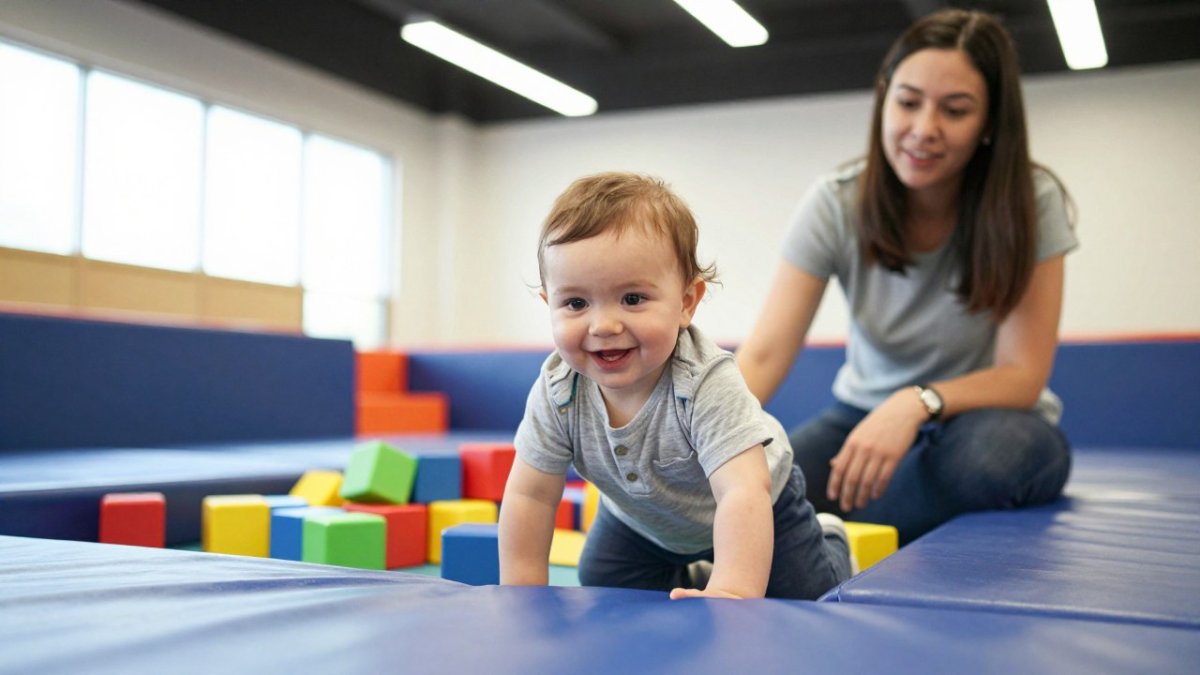
Look for low climbing pieces, soft flooring, and sightlines that let you see your child from wherever you sit. Parents planning a first visit can check indoor play areas for toddlers in Villa Rica for local specifics before they go.
Safe Indoor Play Areas for Children: What to Look For
Safe indoor play areas for children share a few visible traits: staff who watch the floor, equipment that looks maintained, and a space that smells clean rather than chemical-heavy. But visible traits only get you so far. The stronger test is whether a venue can describe its operating practices, because safety in an indoor play center is mostly a set of routines repeated every day.
Supervision, Equipment, and Hygiene Practices
Ask direct questions when you visit. How often is equipment wiped down? Are socks required? Is there a staff member stationed at the inflatables? A facility that answers these easily is usually a facility that takes them seriously. If you want a benchmark for what cleaning frequency should look like, read how often indoor play centers should be cleaned.
The Operational Checklist Worth Running Before You Book
The practical version is a short list of things you can actually observe or ask about:
- Age separation. Are toddlers kept in a dedicated soft play area away from bigger kids, and are inflatables grouped by size and confidence level? Mixed-age free-for-alls are where most bumps happen.
- Supervision on the floor. Is there a staff member whose job is watching the play area, not running the front desk? Ask how many are on the floor during a busy party block.
- Equipment inspection. Ask how inflatables, slides, and climbing pieces are checked and maintained.
- Emergency procedures. Where is the first-aid kit, who is trained to use it, and what is the plan if a child is injured or a fire alarm sounds? A venue should be able to answer without hunting for someone.
- Cleaning routines. Ask how often high-touch surfaces, party tables, and restrooms are cleaned.
- Hand hygiene. Hand sanitizer at entry and exit, sock or shoe rules, and a visible routine for snack areas all reduce the spread of everyday germs.
Realistic Limits on Infection Prevention
No indoor play center can promise a germ-free visit, and any venue that implies otherwise is overselling. Good operators reduce exposure through ventilation, surface cleaning, and hand hygiene, while being honest that children in shared spaces will still pick up ordinary colds. The reasonable standard is a clean, well-ventilated, well-supervised room with routines you can see, not a sterile one.
Safety Standards and What They Signal
Ask whether the venue follows recognized playground and inflatable safety guidance, and how staff are trained on age-appropriate use. You do not need to audit the paperwork, but a venue that can speak to standards, inspections, and training in plain language is signaling that safety is a system rather than a slogan. Pair that with the climate-control questions above, and you have a realistic picture of how a play center actually operates on a busy weekend.
Accessibility and Sensory Needs in Climate Controlled Spaces
A climate-controlled space helps children with sensory needs because temperature and noise can both be managed. That said, no two children are alike, and a busy Saturday afternoon is louder than a weekday morning.
Practical steps for parents:
- Visit during quieter hours first
- Ask staff where the calmest corners are
- Bring noise-reducing headphones if your child uses them
- Watch for a designated quiet zone
For activity ideas that work at home and on the go, see sensory activities for sensory sensitive children.
Trade-Offs and Limitations of Indoor Play
Indoor play is not a full substitute for the outdoors. Fresh air, sunlight, and unstructured nature time matter, and no building replicates them. Cost is another factor, since a paid venue is a budget line that a public park is not.
The honest framing: indoor play solves the weather problem and the supervision problem. It does not solve the “kids need to run in the grass” problem. Most families we talk to use both.
Choosing the Right Climate Controlled Play Area for Your Family
Choosing well comes down to fit, not features. A venue that suits a two-year-old may bore an eight-year-old, and a space built for big group events may feel overwhelming for a quiet afternoon.
What separates a good climate controlled play area from an average one:
- Consistent temperature and ventilation, not just air conditioning
- Age-separated zones, especially a dedicated toddler area
- Visible cleaning routines and staff supervision
- Clear sightlines for parents
- Equipment that matches your child’s size and confidence level
For a broader checklist before you commit, read how to choose local play venues that are better for families.
The real test of any play venue is whether your kids leave tired and happy and ask to come back.
Frequently Asked Questions
How do climate controlled play areas benefit children?
Climate controlled play areas keep the space at a comfortable temperature and humidity level, so children can stay active without overheating or getting too cold. That comfort supports longer play sessions, which in turn help physical activity, gross motor skills, and social interaction. Clean, filtered air also reduces exposure to outdoor allergens and weather extremes, making indoor play a reliable option year-round for families in any climate.
Are indoor play areas suitable for toddlers?
Yes, many indoor play areas include dedicated toddler zones with soft play equipment, low slides, and padded surfaces sized for smaller children. Look for age-separated areas, visible supervision, and clean facilities. Toddler indoor play supports balance, coordination, and confidence at a pace that suits early walkers and climbers, while keeping them away from older kids’ faster play.
What should parents look for in a safe indoor play area?
Check for visible staff supervision, age-appropriate equipment with padded surfaces, clear rules posted at entry, and a clean, well-maintained space. Ask how often equipment and high-touch surfaces are cleaned, whether waivers are required, and if there are quieter zones for children who need a break. A quick walk-through before booking helps confirm the facility matches your child’s needs and comfort level.
Can children stay active indoors year-round?
Yes. Climate controlled indoor play areas let kids run, climb, and move regardless of heat, cold, rain, or poor air quality outside. Regular active play supports physical fitness, mood, focus, and energy release. Facilities with inflatables, play structures, and open floor space give children enough room to get real physical activity even when outdoor playgrounds are unusable due to weather conditions.

Recent Comments